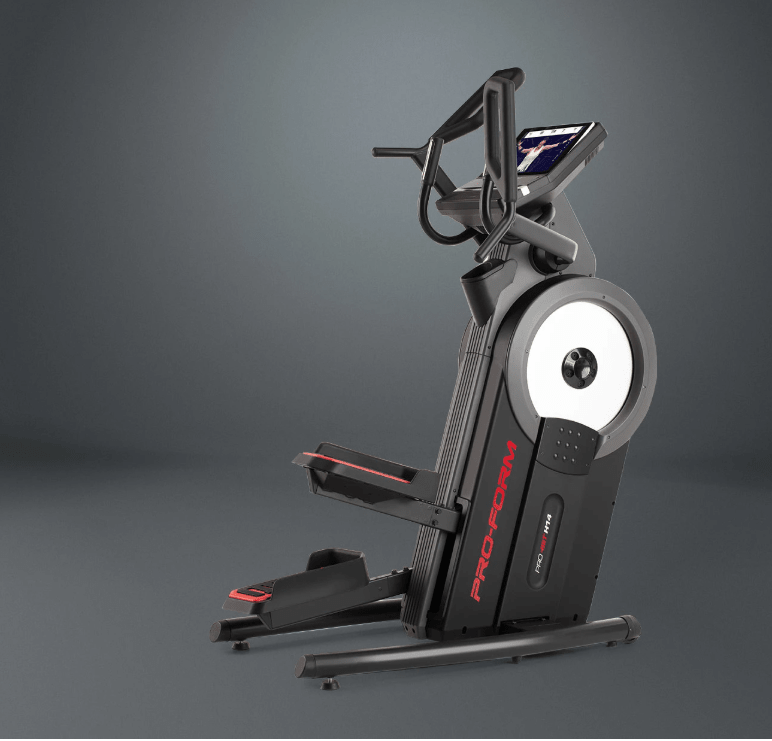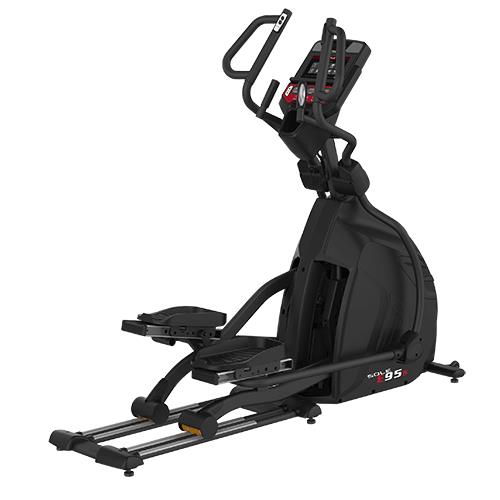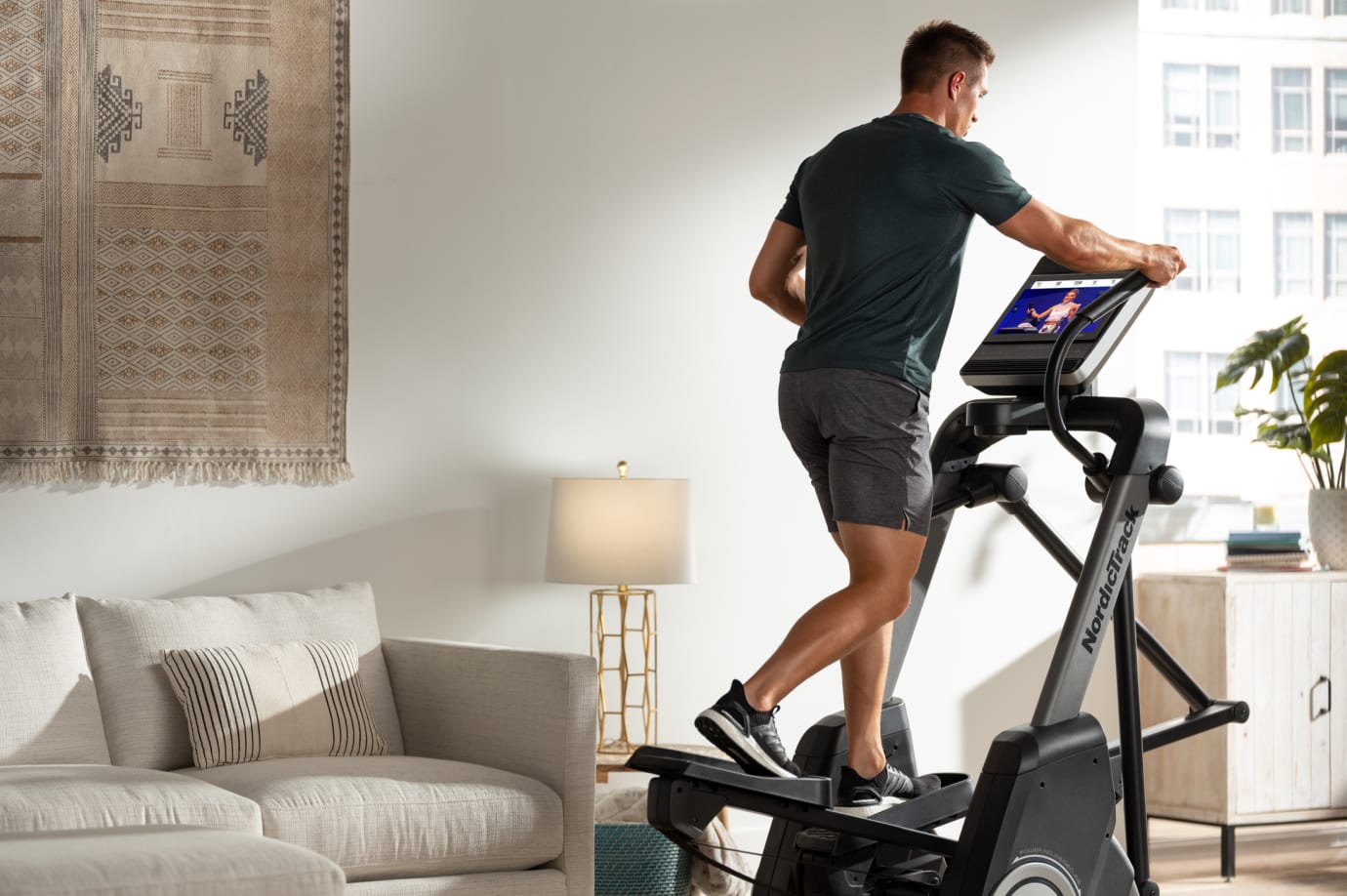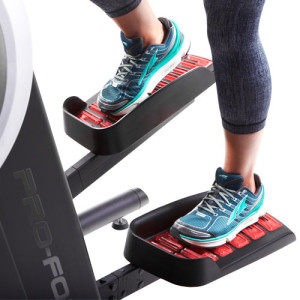
Elliptical trainers offer stride lengths that vary from 14″-22″. Machines with 14″-16″ stride length can seem very awkward and uncomfortable, particularly to taller individuals or runners who are use to longer strides. Ellipticals with stride lengths of 16″ or less tend to feel more like a stepper and have a very choppy motion.
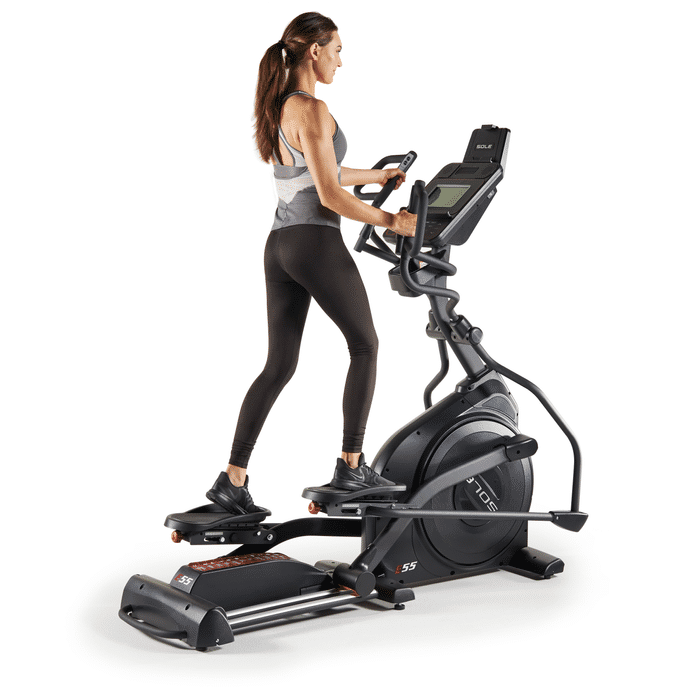
Some high-end models offer self-adjusting stride lengths, allowing you to adjust to a comfortable distance. You want a machine that has a stride that feels natural and fluid, without any restraint. For example, team member Fred Waters is 5’8″ and found the 20″ stride on the Sole E55 elliptical to be very natural in comparison to the 16″ stride on another machine.
The proper stride length is relative to your height. For example, smaller individuals may prefer a 16″-18″ stride, while taller users may want to consider a 20″+ stride. Be aware that not all designated stride lengths feel the same. We have been on some budget ellipticals that claim to have 18″ strides, yet the motion feels constraint and circular, rather than fluid and elliptical. Ideally you want a stride length where you hips to stay level, rather than shifting from side to side.
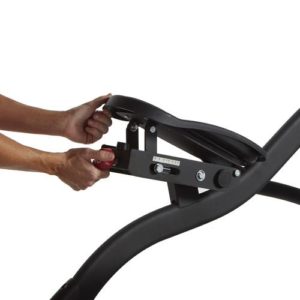
Sole E55 Elliptical Pedals
When exercising on an elliptical trainer, the foot will have some element of flux. It is the same motion you would experience when you walk. The flexing is important since it helps to keep the blood circulating and prevents numbness. The foot pedals on an elliptical trainer should be large enough to allow for some forward and backward movement. You also want them larger so your foot placement is in the most comfortable position within the framework of the elliptical motion.
Many elliptical trainers are now equipped with articulating foot pedals. These are ergonomic, pivoting foot pedals that rise with your feet to mimic the elliptical motion. They are designed to further reduce foot strain and potential numbness by keeping your ankles, knees and hips in proper alignment. You will also find some models that will allow you to adjust the angle of the pedal.
The foot pedals should be within a comfortable distance from each other, and should not be further than your hips. If they are, they can put constant strain on the hips, lower back, knees and glutes. This is particularly problematic for women who generally have narrower hips. Make sure the distance between the pedals are comfortable when working out.
One last note about foot pedals is the composition. Some are hard plastic, while others have a degree of cushioning. You will find with many of the budget models the pedals tend to be a hard plastic, to compensate it helps to have good shoes that offer reasonable cushioning.
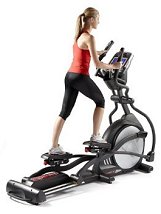
Regarding alignment, another important concern is how your overall body positions in relation to the foot pedals and the handle bar. You want your body to be in a position where you feel like you are walking or running naturally. You don’t want to feel like you are being forced to lean forward or backward in order to maintain your balance.
The position of your body will change a bit depending on the particular machine that you are on. Some brands specifically incorporate features to try to make the user as comfortable as possible. Another thing that will affect your body alignment is the type of drive system. Some people feel that front drive machines tend to make the user lean forward a bit when they are exercising. It is ultimately up to your personal preference. There are pros and cons to each of the drive system types.
In conclusion, when purchasing an elliptical trainer it is important to find a machine that is designed for your physique. You ultimately want a cross-trainer that feels like your are walking or jogging on air. This low impact workout is one of the top benefits of using an elliptical trainer.
Check out more information on our Elliptical Buyer’s Guide. Also, find your next machine on our Best Buy Ellipticals page.